

Coach's Corner
"Coaching techniques are constantly changing . . ."
Soccer and Beyond is excited to present the Coach's Corner. We know how difficult it can be to step in and coach your sons or daughters recreational or travel soccer team. Coaching techniques are constantly changing, new way's of motivation are being discovered, and improved exercises are being developed. The Coach's Corner will be updated every week or so by a Professional Coach who will post a practice plan, a philosophy, a new exercise, or a personal experience designed to help you with the challenge of coaching.
Soccer & Sports Science: by Howard Gray
Firstly, I wish to thank Shawn McDonald for giving me the opportunity to post my thoughts, and thank you for spending the time to read them. My passion is in improving the ability of soccer players and coaches, and if I can help you just a little, then any time spent writing for you will be well worthwhile.
I wanted to come in and make my first article a vibrant and exciting one with diagrams and drills that you could immediately go out and use with your players. However, I feel that this introductory article is necessary to set the stage for everything that follows.
I consider myself a sport scientist with a specialization in strength and conditioning. You may be asking, what is a sport scientist? This comes as no surprise to me as in the US, the term "sport scientist" is usually only applied to lab-coat wearing folk that never see the light of day(let along get out on the soccer pitch). Now whilst research may well have a big role in sport science, when we concern sport science and our sport -soccer- the impact it can have extends far beyond the walls of the laboratory. Sport science is about improving performance, and this can come in many different forms.
Some Elements of Sport Science:
- Anatomy
- Biomechanics
- Nutrition & Hydration
- Performance Testing
- Physiology
- Psychology
- Recovery
- Research
- Sports Medicine
- Strength and Conditioning
You can see from the above that sport science is a broad field that encompasses lots of aspects. As a soccer coach or a player, some of the above may have little direct relevance and you can leave it to the sport scientists to translate all of the technical stuff into the below applied areas of performance enhancement.
Applied Sport Science:
- Assessments (testing & movement/medical screening)
- Athlete Monitoring (physical, psychological, lifestyle)
- Mobility/Flexibility
- Plyometric/Jump Training
- Recovery and Nutritional Strategies
- Speed and Agility
- Sports medicine/Athletic Training
- Strength & Power Training
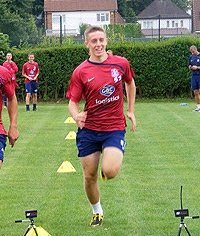
I still call all of the above sport science, buy there are elements that should fall under the remit of strength and conditioning coaches (SCCs). Unfortunately most SCCs focus merely on the strength side of things. If they do venture outside of the weight room then it is to lead "throw up in the bucket" style conditioning. In track and field, or American football, this may well be appropriate. Soccer however, has such a wide variety of demands we need to focus on the big picture rather than one or two specific abilities. In my role at both Reading and Crystal Palace most of my time was out there on the pitch assisting the soccer coaches to make their sessions appropriate to develop the physical qualities of the players in addition to the technical and tactical components.
This may all sound very complicated, but do not fret, as an educated soccer coach you are probably doing a lot of things right and just need a little guidance:
You might be having your players perform an excellent agility drill, but do not have the technical knowledge to coach and improve change of direction technique.
Your technical and tactical soccer sessions may be improving the abilities of the players, yet you need advice on planning how intense and long your sessions are on different days of the week in preparation for the all important game.
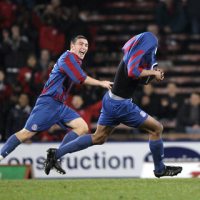 You might identify that the players were tired in the final 20 minutes of the last game, but you cannot determine whether they lack endurance, or were over trained from the weeks training.
You may be encouraging your players to perform strength training to improve performance, but lack the knowledge to know whether the high school SCC or private trainer they are working with is competent
You could be eager reader of soccer fitness books and resources but need advice to determine which ones are good and which ones are not.
With this blog I would like to empower you to make better sport science decisions when you plan, run, and evaluate your training plans and sessions. Beyond that I am 100% open to ideas, questions , and thoughts. Please email me at hg15_83@yahoo.co.uk or pass a message to Shawn if you have something specific you would like to see here.
Coaches Panel
 |
 |
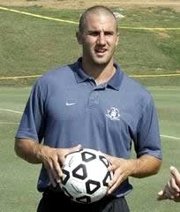
Howard GrayCurrent Work: Howard Gray started his work as a sport science consultant and strength and conditioning coach for the Center of Excellence for Sport Science and Coach Education (CESSCE) at East Tennessee State University (ETSU) in 2010. Howard Gray provides advice, sport science support, and training programs for professional and amateur soccer teams across the US whilst also acting as the strength and conditioning coach for the NCAA Division I soccer teams. Education: In addition to his applied work, Gray is pursuing his PhD in Sport Physiology and Performance under the world renown sport scientist Dr. Mike Stone at ETSU. His research centers around the physiology of soccer and how training practices can be monitored and modified for performance enhancement, and includes product development for Polar Electro and Sportably. Howard Gray earned his MA in Exercise Physiology and Performance from ETSU, and his BS in Recreation Management from the University of Maine at Machias (UMM). Previous Experience: Gray was a 2 time all-conference selection and captain for UMM as a player before moving on to an assistant coaching role with the women's soccer team. Following graduation, he took a position at ETSU as assistant men's soccer coach. Since completion of his masters degree, Gray has served as a strength and conditioning coach at Reading FC and Crystal Palace FC in England, working with 25 full international players from 5 continents at the 1st team level. In youth soccer, 14 of his 21 U18 team players at Crystal Palace gained professional contracts with the club. Additionally Sean Scannell won the Football League Apprentice of the Year award in 2009, and Nathaniel Clyne was named Football League Young Player of the Year in 2010. Certifications: UEFA B Coaching License (English FA), Certified Strength and Conditioning Specialist (NSCA), Accredited Strength and Conditioning Coach (UKSCA) For more about the CESSCE please visit: www.sportscienceed.com Howard Gray's personal blog: pursuitofperformance.blogspot.com |
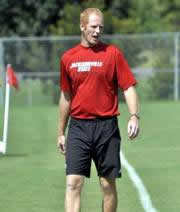
Andy SwiftAndy Swift, 26, is in his second season as an assistant coach on the JSU Soccer staff. His responsibilities encompass training at all positions, recruiting and other various off the field duties. Swift joined the Gamecock staff in 2008 after a one-year stint as an assistant coach in charge of goalkeepers at the University of Akron. Under Swift’s guidance, Akron goalkeepers posted a 1.02 goals against average, which ranked fourth in the MAC. Swift entered coaching after a successful two-sport playing career at the University of Maine at Machias. The Birmingham, England, native lettered in both soccer and basketball at UMM. He received All-Sunrise Conference honorable mention honors as a senior when he led UMM to a 10-5-0 record as the starting goalkeeper. Swift also earned a number of academic awards during his collegiate career. He was named Academic All-American in 2003 and was a two-time Sunrise Conference Scholar Athlete. After his collegiate playing career, Swift served as an assistant soccer coach at Clarion University in Pennsylvania for two seasons before moving on to Akron. Swift holds a National Soccer Coaches Association of America National Goalkeeping Diploma, as well as his National Diploma. In 2005 he graduated Summa Cum Laude from UMM with a BS degree in Recreation Management. He also holds a Masters in Mass Media Arts and Journalism from Clarion University. |